An identification is just the start. Open any species and you get a full field sheet: how to confirm it, what it's declared as where you are, how it spreads, and exactly how to deal with it — all on the device, no reception needed.
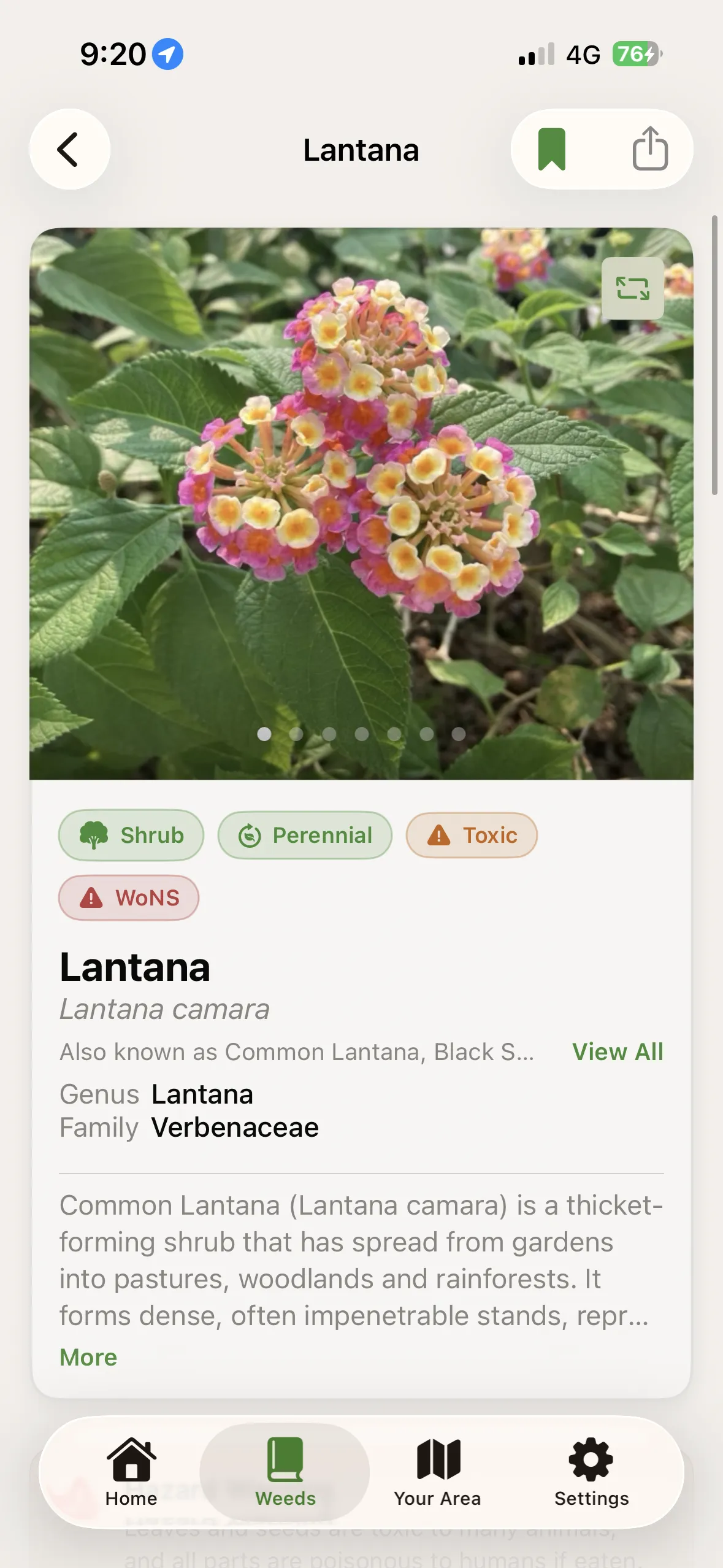
Every species in WeedScout opens to the same depth of information. Here's what's inside, using Lantana (Lantana camara) as a worked example.
Common name, scientific name, and the names it's known by elsewhere — plus quick trait tags so you immediately know the kind of plant you're dealing with.
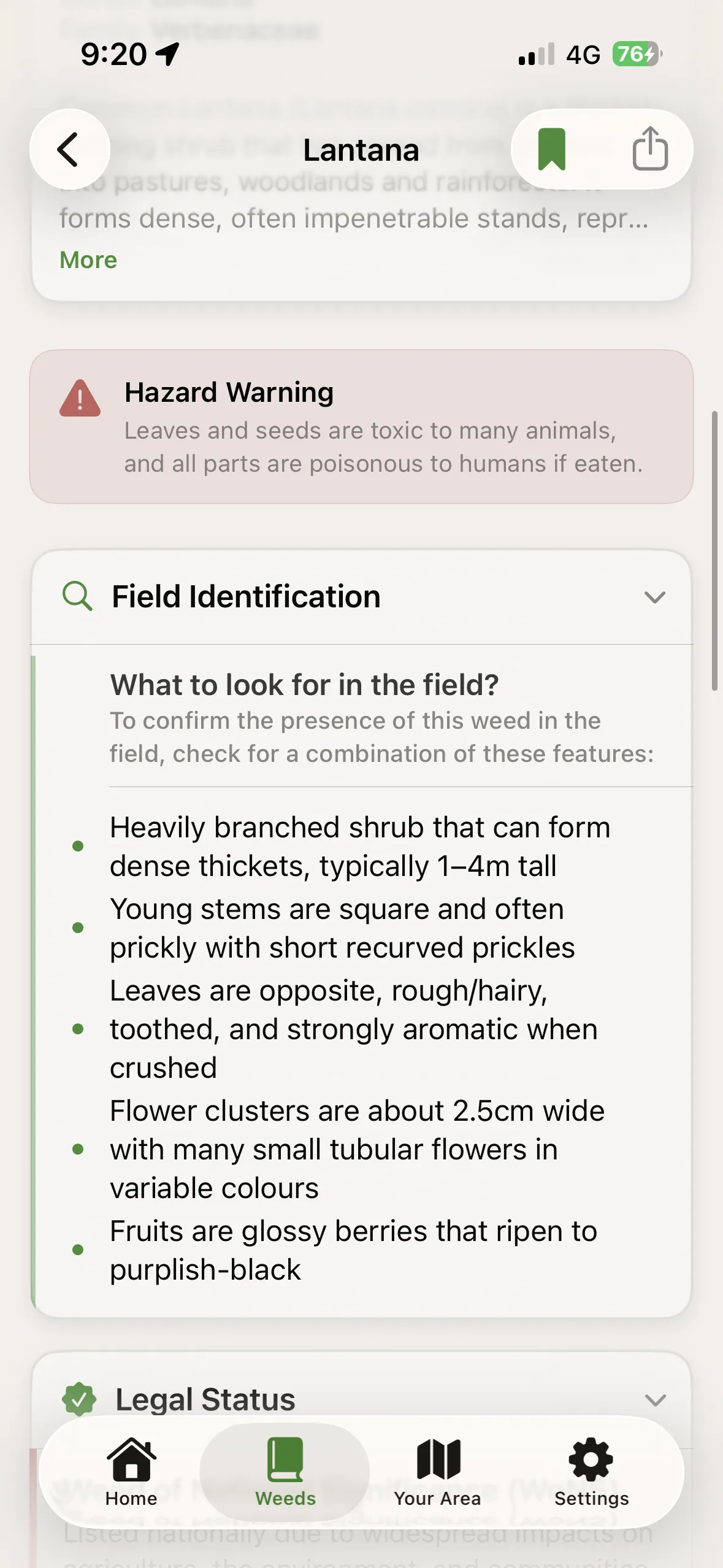
A short checklist of the features that confirm the species, so you can verify the ID against the plant in front of you rather than trusting the camera alone.
Declarations and your obligations change at every border. WeedScout shows the status for your state up front, and lets you compare the rest — because what you must do about a weed depends entirely on where you're standing.
Listed nationally due to widespread impacts on agriculture, the environment and communities. Management is coordinated to limit spread and impact.
Status shown for convenience. Legal definitions and obligations vary, so always confirm details with official government sources.
The places it favours, and the vectors that move it — so you know where to look for it and how to stop it spreading further.
Birds eat the fruits and void seeds away from the parent plant, enabling long-distance spread.
Other animals consume fruits and pass seeds in droppings.
Seeds are spread by water, including along waterways and river margins.
Movement of soil, slashing, and ornamental plant trade spread it into clean areas.
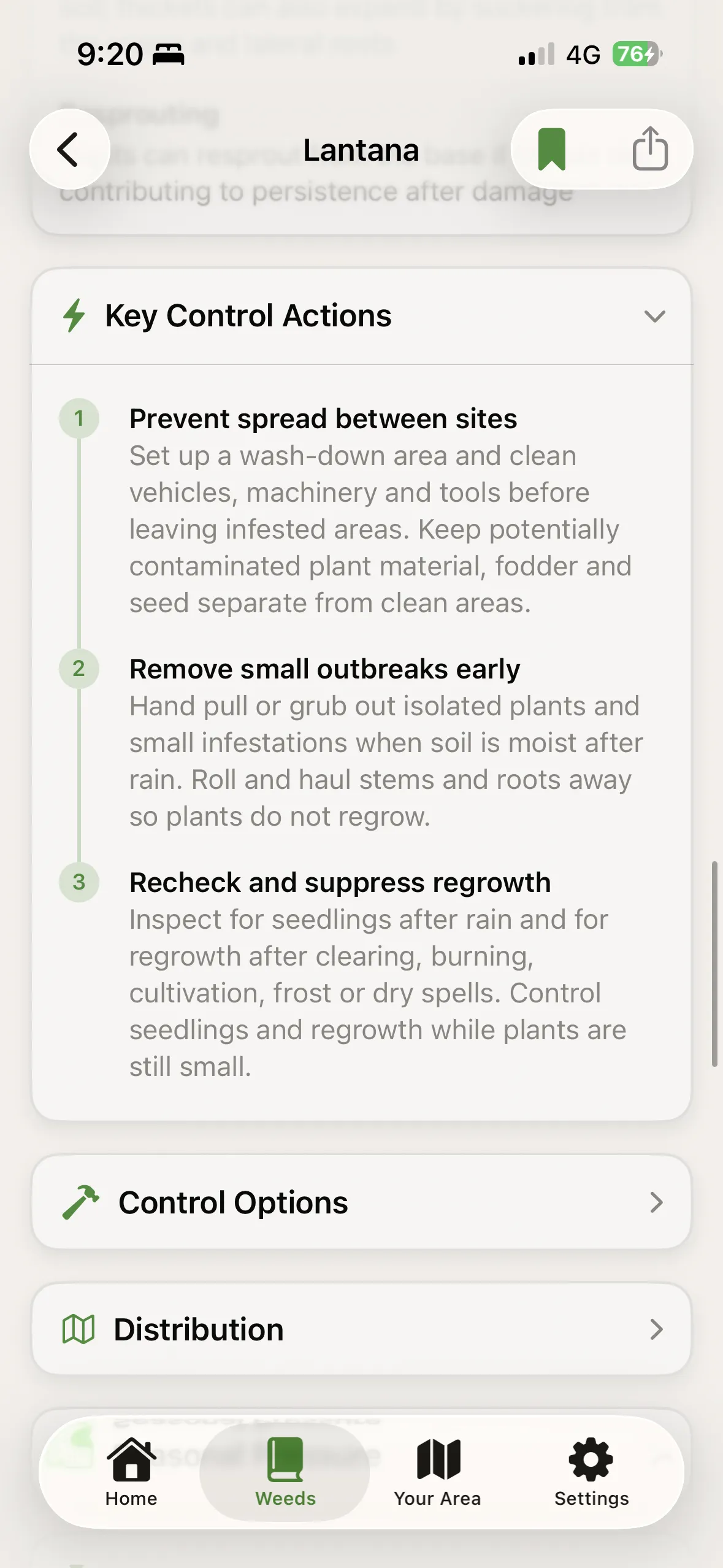
Before the full method list, WeedScout leads with the handful of actions that matter most for this species — what to do first to get ahead of it.
Set up a wash-down area and clean vehicles, machinery and tools before leaving infested areas.
Hand-pull or grub out isolated plants while soil is moist after rain. Haul stems and roots away.
Inspect for seedlings after rain and for regrowth after clearing, burning or cultivation.
The full set of methods, grouped by what they're for — knocking the weed down, stopping it spreading, and restoring the site so it doesn't come back. Each option is tagged by type.
Grub out roots with a mattock when soil is moist. Remove roots and stems or plants can regrow.
Spray actively growing foliage for thorough coverage with good canopy penetration.
Cut stems near ground level and apply herbicide to the cut surface straight away.
Wash down vehicles and tools before moving from infested to clean areas.
Keep potentially contaminated fodder and plant material separate from clean areas.
Re-establish competitive vegetation on treated areas to inhibit germination and reinvasion.
Maintain good pasture cover and inspect treated sites to stop seedlings establishing.
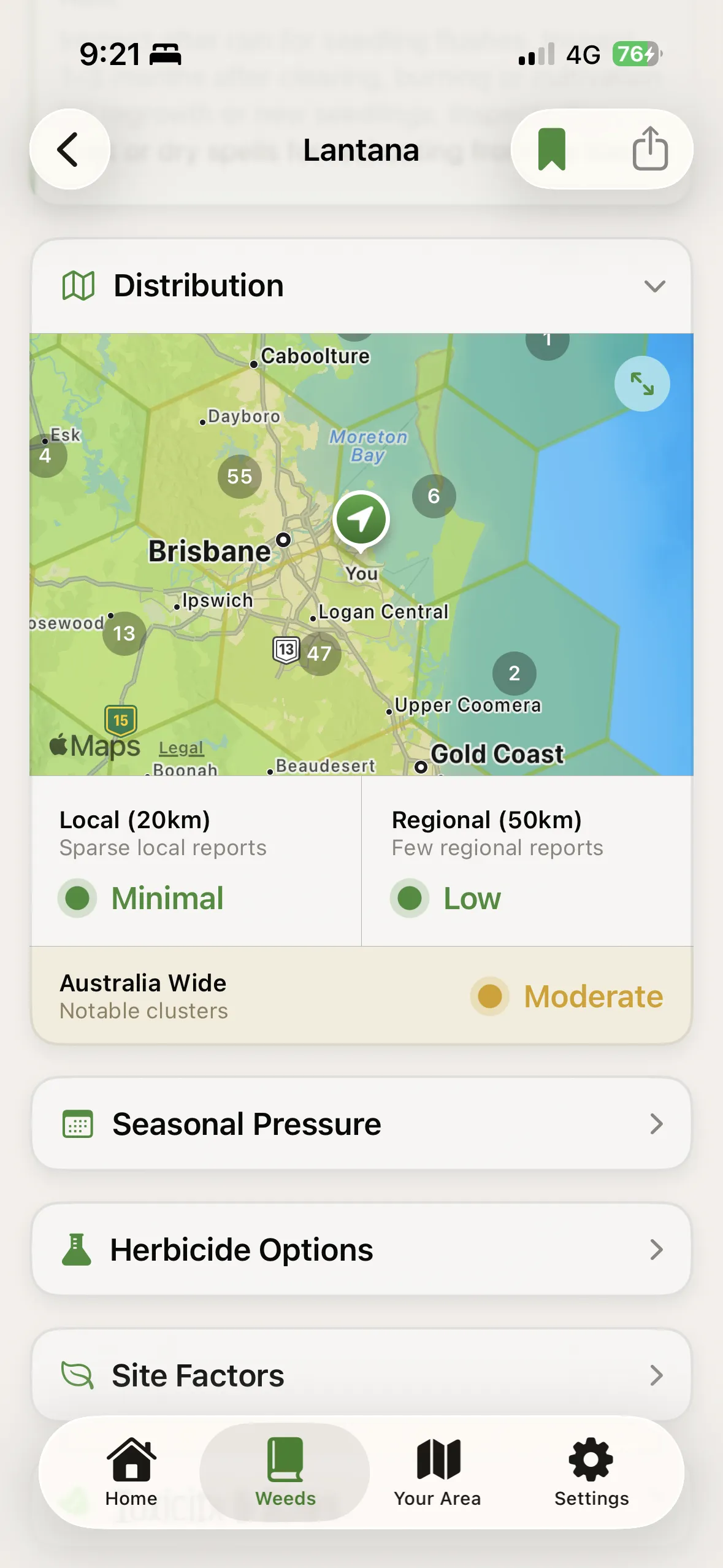
Built from community and reference records, WeedScout shows how established the species is at a local, regional and national scale — so you can tell whether you're catching an outlier or working inside a known hotspot.
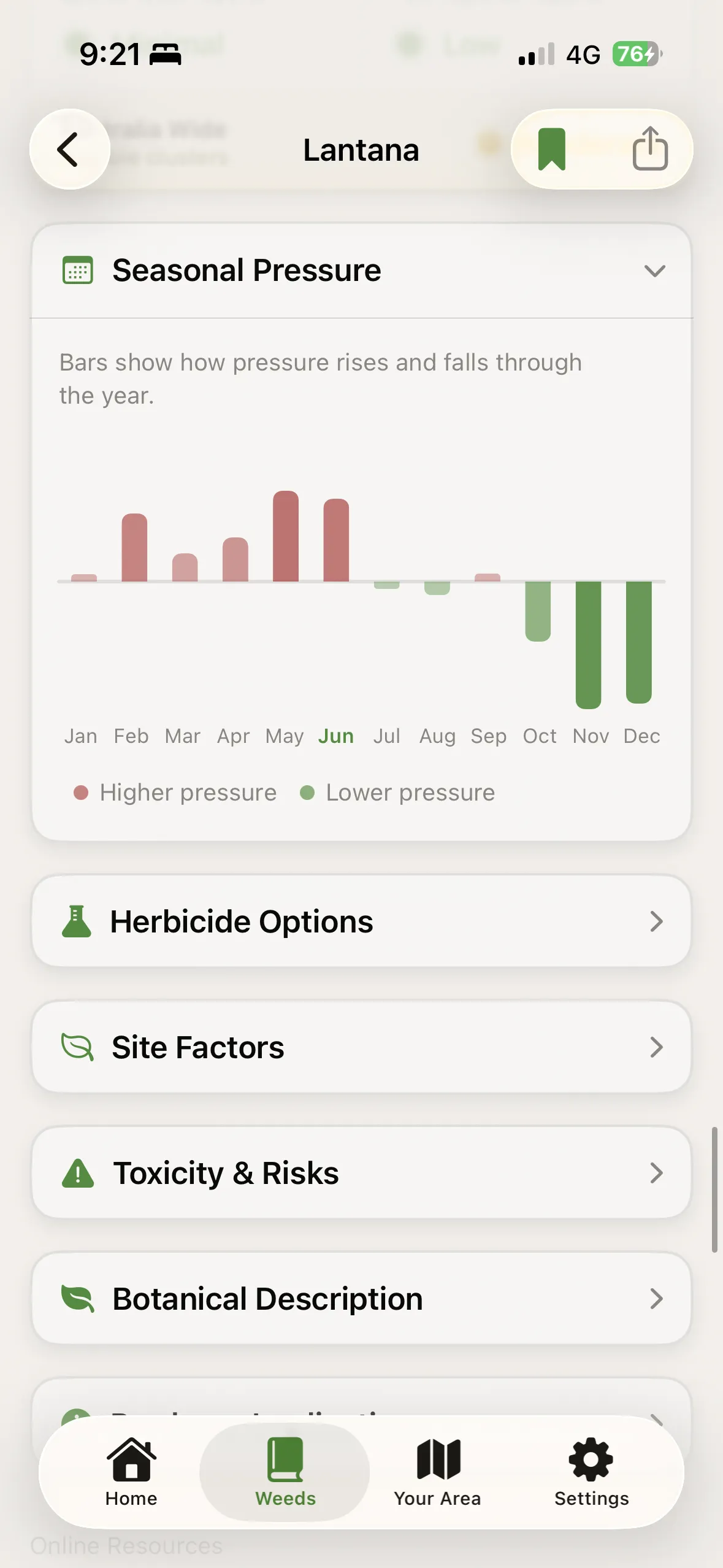
A month-by-month view of when pressure rises and falls through the year, so you can time control for when it bites hardest — and when treatment lands best.
Where chemical control applies, WeedScout lists registered options with their mode-of-action group and application method — kept current and noted with a last-updated date.
The conditions that shape how it behaves — and how hard it'll be to shift. These are the factors that decide whether a single treatment holds or you're in for repeat passes.
Adapted to a wide range of soils.
Resprouts after fire; clearing can trigger dense regrowth from the base.
Grows in full sun to part shade, invading rainforest edges and gullies.
Established plants tolerate dry spells once their root system is set.
Builds a persistent soil seedbank, so follow-up over several seasons is essential.
Where a species poses a risk, WeedScout flags it plainly — both the direct hazard and the broader impacts that make it worth controlling.
Leaves and seeds are toxic to many animals, and all parts are poisonous to humans if eaten. Green berries are the most dangerous; livestock losses occur where stock graze infestations.
Forms dense, impenetrable thickets that smother pasture and restrict stock and vehicle access.
Displaces native vegetation along rainforest margins and waterways, reducing biodiversity.
A full botanical description for when you need to be precise, plus producer implications and links out to the authoritative records behind every species.
Lantana camara is a thicket-forming shrub that has spread from gardens into pastures, woodlands and rainforests. It forms dense, often impenetrable stands, with square young stems, opposite aromatic leaves, and flat-topped flower clusters that range in colour from yellow and orange to pink and red, followed by glossy berries ripening to purplish-black.
Every one of the 1,200+ species in WeedScout opens to this same depth — free to identify, private, and built for Australia.
Get WeedScout on iPhone → WeedScout